
- All
- Product Name
- Product Keyword
- Product Model
- Product Summary
- Product Description
- Multi Field Search

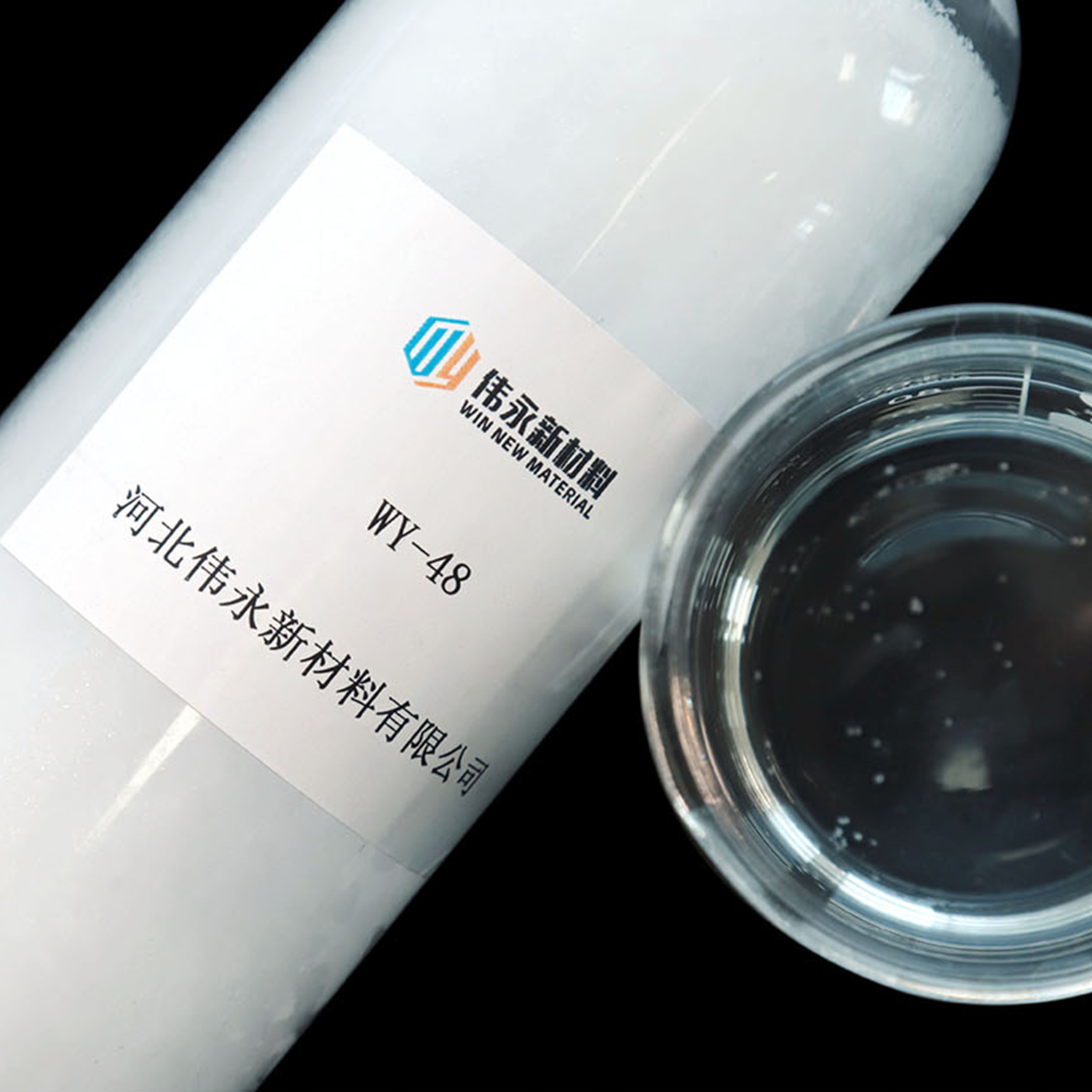


Low Viscosity Fischer Tropsch Wax WY-48 is a high-performance synthetic wax engineered for applications demanding exceptional flow properties.
| Quantity: | |
|---|---|


Produced via the Fischer-Tropsch synthesis process using natural gas-derived syngas, this wax exhibits a viscosity of 8 mPa·s at 140°C—a key parameter that distinguishes it from higher-viscosity FT wax grades . With a melting point range of 60–70°C and a purity level of ≥99%, it combines low-temperature fluidity with the chemical stability characteristic of linear alkanes. Its clear appearance and minimal oil content (≤0.5%) make it suitable for precision applications where residue and contamination must be avoided .
Ultra-Low Melt Viscosity
At 8 mPa·s @140°C, its fluidity surpasses conventional FT waxes, enabling superior dispersion of pigments and fillers in high-viscosity systems like PVC compounds. This reduces extrusion pressure by up to 20% in plastic processing lines.
Controlled Melting Range
The 60–70°C melting point balances workability with thermal stability, making it ideal for processes requiring moderate heat resistance without sacrificing flow. It outperforms paraffin wax in hot melt formulations by maintaining viscosity consistency across production temperatures .
Enhanced Lubricity
Its linear hydrocarbon structure (C20–C30 range) provides exceptional slip properties, reducing friction between polymer chains in extrusion processes and improving surface gloss in finished plastic products by 15–20% .
PVC Processing
As an external lubricant in rigid PVC pipe and profile extrusion, it reduces melt viscosity, enabling faster production speeds while minimizing die buildup. It enhances pigment dispersion in color masterbatches, ensuring uniform coloring with 30% less additive usage .
Hot Melt Adhesives
In packaging and hygiene adhesives, it adjusts viscosity to improve wetting on substrates, increasing bond strength by 25% in corrugated board applications. Its low volatility prevents adhesive stringing during application .
Textile Sizing
Emulsified formulations improve fiber lubricity in weaving processes, reducing yarn breakage by 40% and enhancing fabric softness. It is easily removable in post-processing washes, avoiding residue issues .
What makes WY-48 suitable for high-speed extrusion?
Its 8 mPa·s viscosity at 140°C ensures optimal melt flow, allowing faster throughput without compromising product integrity in PVC and polyolefin processing .
Can it be used in food-contact applications?
Yes, its ≥99% purity and compliance with FDA regulations for indirect food contact make it suitable for food packaging adhesives and coatings .
How does it compare to PE wax in lubrication?
Unlike PE wax, WY-48 offers lower melt viscosity and better thermal stability, providing superior lubrication in high-temperature processes above 60°C .
High Melting Point and Narrow Melting Range: It has a relatively high melting point and a narrow melting range, enabling it to melt and solidify within a narrow temperature interval. This allows it to maintain a stable physical state, retain good performance even in high-temperature environments, and is less prone to significant changes in properties due to temperature fluctuations. It is suitable for application scenarios with high requirements for temperature stability.
Low Melt Viscosity: It has low viscosity in the molten state, which can effectively reduce the viscosity of plastic melts, making the plastic processing process smoother and improving production efficiency. This is particularly significant in the extrusion processing of high-viscosity systems.
Excellent Lubricity: It can be used as an internal and external lubricant for plastics such as PVC. It can reduce the friction and adhesion between PVC and steel, adjust the plasticization rate, reduce friction and energy consumption during processing, and at the same time promote material flow and improve molding performance. In addition, its small molecular weight, few branches, and high crystallinity make it easy to penetrate into high-viscosity macromolecular chains, resulting in obvious late-stage lubrication effects.
Low Migration Rate: With low oil content and low penetration, the lubricant has a low migration rate. During plastic processing and use, it is not easy to migrate from the inside of the product to the surface, ensuring that the product maintains stable performance for a long time and avoiding problems such as stickiness and precipitation on the product surface caused by wax migration.
Strong Oxidation Resistance: It is mainly composed of saturated straight-chain alkanes without double bonds, giving it strong oxidation resistance. It is not easily oxidized, has good weather resistance, and can be used for a long time in outdoor environments without easily undergoing performance changes.
Improving Product Surface Quality: In plastic processing, a small amount of addition can significantly improve the surface gloss of products. It also helps in the dispersion of pigments and fillers during mixing, making the product appearance more attractive and the color more uniform. When used in inks and coatings, it can also improve the wear resistance and wrinkle resistance of the applied materials.
Fine Crystal Structure: Its fine crystal structure makes the wax have a uniform texture, stable performance, and good hardness and wear resistance. It can be used in occasions with high requirements for hardness and wear resistance, such as polishing materials.
Effective in Small Dosages: Compared with ordinary polyethylene wax (PE wax), to achieve the same lubrication effect, the dosage of 48# Fischer-Tropsch wax is only 70%-80% of that of PE wax, which can reduce production costs.


