
- All
- Product Name
- Product Keyword
- Product Model
- Product Summary
- Product Description
- Multi Field Search
Views: 0 Author: Site Editor Publish Time: 2026-10-08 Origin: Site


In industrial compounding and formulation, the physical form of an additive dictates production efficiency just as much as its chemical specifications. Selecting the incorrect physical form of PE wax leads to incomplete dispersion, inconsistent melt viscosities, material handling bottlenecks, and severe occupational dust hazards. Hopper bridging and ratholing frequently halt extrusion lines when operators mismatch the additive geometry with the feeding equipment. Resolving these processing inefficiencies requires a strict technical evaluation of powder against flakes. You must weigh surface-area benefits against bulk-handling realities to match specific manufacturing environments. Plant managers cannot rely solely on molecular weight data. You need to align the physical geometry of the wax with your specific shear profiles, thermal capacities, and material handling infrastructure to maintain continuous, defect-free production.
Dispersion vs. Handling Trade-off: Powders offer rapid dispersion and high surface area ideal for low-shear environments, while flakes provide superior flowability and lower dust generation for high-shear melt compounding.
Application-Specific Dominance: Flakes dominate high-volume PVC extrusion and hot melt adhesives; powders are critical for solvent-based inks, coatings, and specialized masterbatches.
Safety and Compliance: Transitioning to powder forms requires mandatory facility audits for combustible dust mitigation (ATEX/OSHA compliance).
Alternative Innovations: Oxidized wax microbeads bridge the gap between powder and flakes, offering controlled particle sizes with improved flow characteristics for specialized emulsions.
Achieving homogeneous distribution within a host polymer or solvent without extending cycle times remains the baseline requirement for any wax additive. Plant operators often focus heavily on molecular weight and density. However, the physical geometry of the additive dictates how quickly and uniformly it integrates into the base matrix. Different PE wax product forms directly influence feed rates, thermal degradation risks, and final product consistency.
Base synthesis methods establish the chemical baseline. High-temperature and high-pressure ethylene polymerization creates distinct molecular structures compared to the thermal degradation of polyethylene scrap. Once the base wax is synthesized, manufacturers employ specific cooling, flaking, or cryogenic milling techniques. These secondary processes dictate the final physical geometry.
Operators must solidify the wax exiting the reactor as a hot liquid. Manufacturers drop the liquid onto a chilled rotating drum to produce thin flakes. Spraying it through a cooling tower creates prills. Subjecting the solid material to high-speed mechanical or cryogenic milling produces fine powders. Each geometric variation behaves differently in a feed hopper and inside the processing equipment.
Physical form impacts processing efficiency immediately at the dosing stage. Volumetric and gravimetric feeders rely on consistent bulk density and flowability. Irregular geometries cause feed rate fluctuations. Inside the extruder or mixing vessel, the surface-area-to-volume ratio determines the melt rate. High surface area promotes rapid melting. Low surface area delays melting, which can be advantageous or detrimental depending on the shear profile of the equipment. Final product attributes like surface gloss, lubricity, and processability depend entirely on achieving a flawless, uniform dispersion before the material exits the die or coating head.
When you run a high-speed compounding line, the feed throat geometry and the physical form of the additive must match. If you feed a highly micronized powder into a standard smooth-bore feed throat designed for pellets, the powder often fluidizes. It traps air, reduces the bulk density of the overall blend, and causes the extruder to surge. Surging leads to inconsistent output and dimensional variations in the final extruded profile.
Conversely, feeding large flakes into a short-barrel extruder with a low L/D (length-to-diameter) ratio often results in incomplete melting. The flakes ride the screw flights without experiencing enough shear or conductive heat transfer. You end up with un-melted wax particles acting as stress concentrators in the final plastic part.
Consider the following processing variables directly impacted by the physical form of the wax:
Gravimetric Feeding Accuracy: Load cells on loss-in-weight feeders require consistent material slumping. Powders can avalanche, causing dosing spikes, while flakes provide a steady, predictable mass flow.
Entrained Air: Fine powders carry significant interstitial air into the melt zone. This requires aggressive vacuum venting downstream to prevent voids in the extrudate.
Melt Viscosity Stability: Rapidly melting powders drop the melt viscosity immediately in the feed zone. Flakes delay this viscosity drop until they reach the compression zone, altering the shear profile of the entire barrel.
Thermal Degradation: Powders expose more surface area to barrel heaters. If the line stops, powders degrade and crosslink much faster than flakes, leading to black specks in the next production run.
Flakes represent one of the most common physical forms for polymer additives. They are characterized by a flat, irregular shape with a relatively uniform thickness but varying diameters. Compared to larger lumps or spherical prills, flakes offer a moderate surface area. They strike a practical balance between handling ease and melting efficiency.
Selecting flake polyethylene wax for industrial processing provides immediate material handling advantages. Flakes exhibit excellent bulk flowability. They move smoothly through automated gravimetric feeding systems, augers, and rotary valves without packing or clumping. This consistent flow ensures accurate dosing, which is critical for maintaining strict formulation tolerances in continuous extrusion processes.
Flakes generate minimal dust. This significantly reduces explosion risks in the facility. It also lowers daily housekeeping requirements and prevents fine particulates from contaminating adjacent production lines. Furthermore, producing flakes avoids the energy-intensive secondary milling processes required for powders. This streamlines the supply chain and reduces the overall carbon footprint of the raw material.
Despite these handling benefits, flakes present specific implementation limitations. Their lower surface area results in slower melt times compared to powders. They require higher shear forces or longer residence times in the extruder to achieve complete homogenization. If processing temperatures are too low or the screw design lacks sufficient mixing elements, operators risk generating unmelted localized concentrations. These inclusions cause surface defects, weak points in extruded profiles, or blockages in fine filtration screens.
When you load a supersack of flakes into a bulk bag unloader, the material typically discharges without the need for aggressive mechanical massage paddles. The irregular edges of the flakes prevent them from forming a solid, interlocking matrix under their own weight. This means you can rely on standard rotary valves to meter the material into your pneumatic transfer lines.
However, you must monitor the fines content within your flake supply. During transport and pneumatic conveying, flakes degrade and break apart. A batch that started with less than 1% fines can arrive at the extruder feed throat with 5% to 8% fines. These fines accumulate in the dust collection system or blind the filters on your vacuum receivers. You must implement routine sieve analysis on incoming shipments to ensure the flake integrity meets your specifications.
Flakes dominate specific industrial sectors where high shear and high temperatures are standard. Primary use cases include:
Hot melt adhesives (HMA) formulation.
PVC pipe and profile extrusion.
Heavy-duty rubber compounding.
Industrial lubricant manufacturing.
Color masterbatch production utilizing twin-screw compounding.
Physical Characteristic | Standard Flake | Micronized Powder | Impact on Processing |
|---|---|---|---|
Bulk Density | 0.40 - 0.55 g/cm³ | 0.20 - 0.35 g/cm³ | Flakes require smaller hopper volumes for the same mass. |
Surface Area | Low to Moderate | Extremely High | Powders melt faster but risk early thermal degradation. |
Flowability | Free-flowing | Cohesive, prone to bridging | Flakes feed reliably through standard augers. |
Dust Generation | Minimal | High | Powders require ATEX/OSHA compliant extraction systems. |
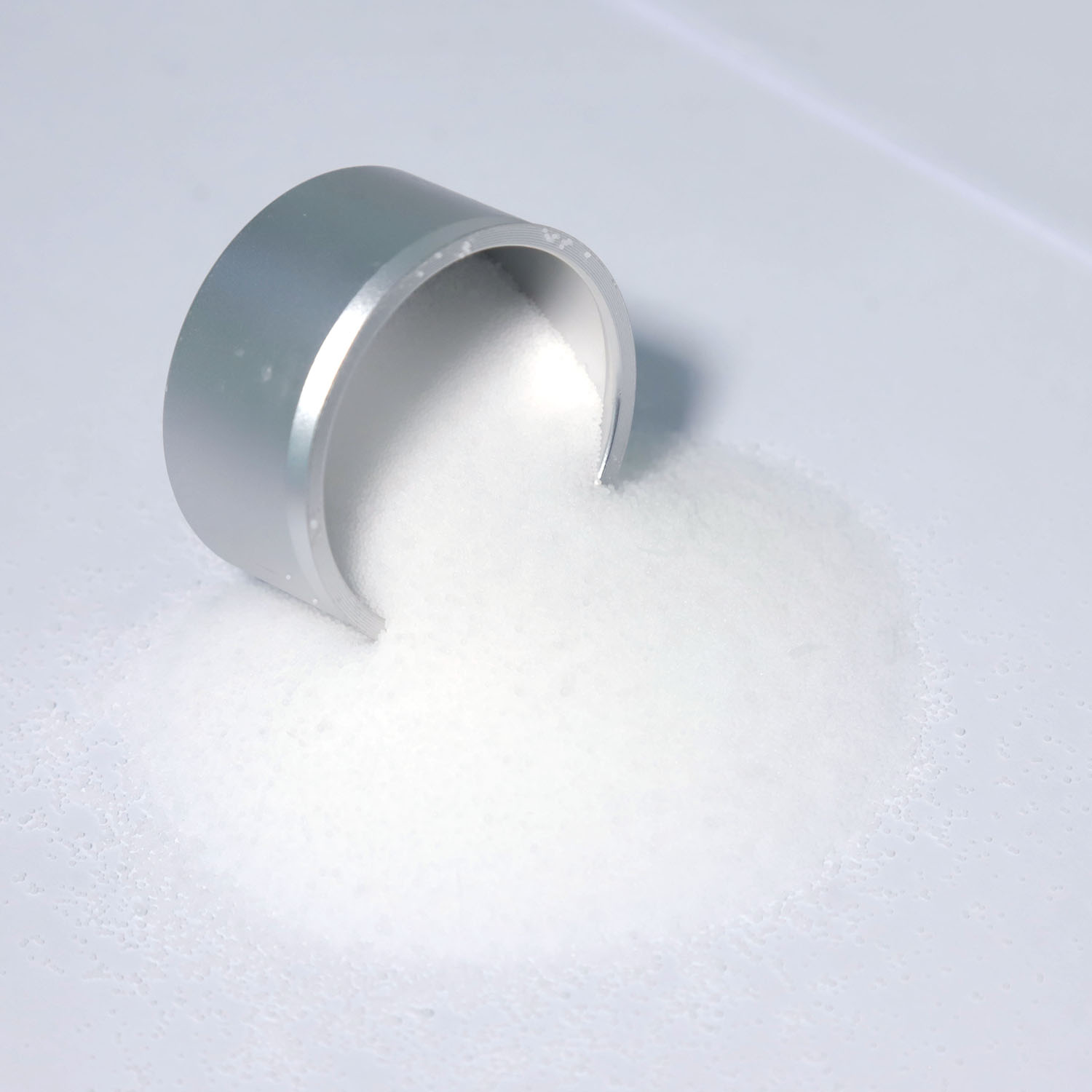
Manufacturers engineer powders for applications where rapid dispersion is non-negotiable. They produce PE wax powder through advanced micronization or cryogenic milling processes. This creates a micron-level particle size distribution. The resulting powder possesses an exponentially higher surface area than flakes or prills.
The primary processing advantage of powder is its rapid dissolution and dispersion. In solvent-based, water-dispersed, and low-shear systems, powders integrate almost instantly. They do not require the intense mechanical shear or high thermal input needed to melt flakes. This rapid integration prevents cycle time extensions in batch mixing operations.
Powders are immediately available for surface modification. During the drying process of inks and coatings, the fine wax particles migrate efficiently to the surface. This migration provides critical performance characteristics. It delivers uniform matting, prevents pigment sedimentation, controls thixotropy, and significantly enhances metal marking resistance and scratch resistance in thin films.
Implementing powders introduces substantial material handling risks. Powders are highly susceptible to bridging and ratholing in standard storage hoppers. The fine particles interlock, creating stable arches over the discharge outlet, halting material flow. You must modify specific equipment to mitigate this risk. Facilities must install mechanical agitators, pneumatic vibrators, or specialized pneumatic conveying systems to ensure continuous, reliable feeding.
When dealing with powders on the production floor, humidity control becomes a major operational factor. Polyethylene itself is hydrophobic, but the massive surface area of micronized powder can trap surface moisture from humid plant air. This moisture exacerbates clumping and bridging. If you run a powder feed system in a non-climate-controlled facility during summer months, you will experience erratic dosing.
To successfully handle powders, engineering teams must implement specific hopper modifications:
Install mass-flow hoppers with steep cone angles (typically greater than 60 degrees) to prevent material stagnation on the walls.
Utilize ultra-high molecular weight (UHMW) polyethylene liners inside the hopper to reduce wall friction.
Equip the discharge throat with mechanical bridge breakers or ribbon agitators to keep the powder fluidized.
Implement flexible connections between the hopper and the feeder to allow for the use of pneumatic vibrators without damaging the load cells.
Powders are the strict default for industries relying on low-shear mixing or thin-film applications. Primary use cases include:
Solvent-based and water-based printing inks.
Industrial surface coatings and wood finishes.
Highly loaded color masterbatches requiring rapid pigment wetting.
Specialized automotive and floor polishes.
Powder coatings where uniform dry blending is required.
Process engineers frequently face scenarios where the rapid dispersion of a powder is required, but the facility infrastructure can only handle free-flowing materials. To address this, manufacturers developed advanced hybrid forms. Utilizing oxidized wax microbeads as an alternative form bridges the gap between traditional powders and flakes.
Microbeads feature a precise spherical geometry. This shape provides a high surface area comparable to coarse powders, facilitating rapid melting and dispersion. Simultaneously, the spherical nature eliminates the interlocking behavior that causes powders to bridge. Microbeads roll over one another, delivering the free-flowing, low-dust characteristics typically associated with premium pellets or flakes. They feed flawlessly through standard loss-in-weight feeders without requiring mechanical agitation.
Beyond physical geometry, these microbeads offer a distinct chemical advantage. The oxidation process introduces polar functionality to the polymer chain, specifically carboxyl and hydroxyl groups. This polarity makes the wax highly compatible with polar resins and aqueous systems. Microbeads are highly effective for water-based dispersions, textile emulsions, and advanced coating applications. In these specific formulations, both chemical emulsification and dry-flow handling properties are critical for production stability.
In a practical plant setting, switching from a standard powder to an oxidized microbead often eliminates the need for capital expenditure on new feeding equipment. If your current line uses standard augers designed for pellets, a micronized powder will pack into the auger flights, causing the motor to over-torque and trip the drive. Microbeads bypass this issue entirely. They convey smoothly through the auger, maintaining a consistent bulk density and ensuring accurate gravimetric dosing.
The polar groups on the oxidized microbeads act as internal coupling agents. When compounding highly filled systems, such as calcium carbonate-loaded PVC or flame-retardant cables, the oxidized wax wets out the inorganic filler particles much faster than non-polar alternatives. This rapid wetting reduces the overall melt viscosity and allows for higher filler loadings without sacrificing the mechanical properties of the final compound.
Selecting the optimal physical form requires a systematic evaluation of the manufacturing environment. Engineers must analyze shear dynamics, material handling infrastructure, and occupational safety requirements.
The host equipment dictates the necessary physical form. Twin-screw extruders generate massive internal friction and high shear. This environment easily breaks down and melts flakes, making them the optimal choice. Conversely, high-speed dispersers used in paint manufacturing rely on fluid dynamics and low mechanical shear. Flakes will simply circulate in the vortex without dispersing. Powders are mandatory here to ensure complete integration.
Operators must calculate the impact of wax melting points on cycle times based on physical form. A powder with a 105°C melting point will transition to a liquid state significantly faster than a flake with the exact same melting point due to the surface-area-to-volume ratio. If a compounding line is limited by heating capacity, switching to a powder or microbead can increase throughput.
You also need to evaluate the residence time of your process. In a short-barrel single-screw extruder, the material might only spend 30 seconds inside the heated zones. Flakes might not fully melt in this tight window, leading to un-melted inclusions in the extrudate. In this specific scenario, moving to a coarse powder or microbead ensures complete melting before the material reaches the die screen.
Evaluate existing silo and hopper geometries before changing wax forms. Mass flow hoppers, characterized by steep cone angles and smooth interior walls, handle powders reasonably well. Funnel flow hoppers, with shallow angles, will immediately bridge if fed with micronized powder. Flakes tolerate funnel flow designs without issue.
Analyze the mechanical requirements for feeding. Standard augers and screw feeders handle flakes efficiently. Attempting to run fine powders through a standard auger often leads to compaction and erratic dosing. Retrofitting a line for powder requires installing pneumatic feeders, fluidization pads, or mechanical stirrers.
Pneumatic conveying systems also react differently to physical forms. Dense-phase pneumatic systems push slugs of material through the pipe at low velocities. This works well for powders but can crush flakes into excessive fines. Dilute-phase systems use high-velocity air to suspend the particles. This handles flakes well but requires massive filtration systems at the receiving end to separate the fine powder from the conveying air.
Airborne polymer dust presents a severe safety hazard. Facilities must compare the combustible dust ratings (Kst values) of different forms. Flakes generate negligible dust and rarely require specialized handling. Powders, however, can form explosive clouds when suspended in air at specific concentrations.
Transitioning to powder necessitates comprehensive facility upgrades. Silos and dust collectors require explosion venting or suppression systems. Transfer lines need specialized filtration and rigorous grounding to prevent static discharge. Facilities must adhere strictly to ATEX or OSHA combustible dust regulations, requiring regular audits and specialized housekeeping protocols.
You cannot simply sweep up spilled powder with a standard broom. This action kicks the fine particles into the air, creating an immediate explosion hazard. Plant personnel must use specialized, explosion-proof industrial vacuums equipped with HEPA filters. The electrical enclosures in the powder handling area must also carry the appropriate NEMA or IP ratings to prevent dust ingress from shorting out contactors or igniting from a stray spark.
Theoretical evaluation must translate into practical application. Different industrial sectors have established clear preferences based on decades of processing data.
For rigid and flexible PVC extrusion, flakes are optimal. In this environment, the wax acts as an external lubricant. It must delay plasticization slightly to prevent the PVC compound from degrading prematurely in the barrel. Flakes melt progressively as they travel down the screw. This controlled melting provides necessary lubrication between the polymer melt and the metal barrel. It significantly improves surface gloss and output rates without complicating the upstream dry-blending process. Powders would melt too quickly, acting as an internal lubricant and potentially dropping the melt viscosity too soon.
When running high-output PVC pipe lines, operators rely on the bulk density of the dry blend to maintain head pressure. If you introduce a fine wax powder into the high-intensity mixer, it can coat the PVC resin particles too early, preventing the necessary friction required to heat the blend. Flakes remain discrete during the initial mixing phase, allowing the resin to absorb the plasticizers and stabilizers properly before the wax melts and coats the exterior.
In adhesive manufacturing, flakes or lumps are strongly preferred. HMA production utilizes high-temperature melt tanks equipped with heavy-duty agitators. These tanks easily accommodate flakes. The priority in HMA facilities is low dust generation and easy bulk loading from supersacks. Rapid initial dispersion is less critical because the entire batch is held at elevated temperatures for extended periods. Flakes offer excellent versatility, allowing formulators to adjust open times, set times, and reduce overall melt viscosity efficiently.
Dumping a supersack of fine powder into an open melt tank creates a massive dust cloud. This coats the heating elements, the tank walls, and the operators. Flakes drop cleanly into the molten resin. They sink and melt predictably without aerating the batch. Entrapped air in an HMA formulation causes foaming during application, leading to weak bond lines and rejected packaging. Flakes prevent this aeration entirely.
For surface coatings and printing inks, powders or microbeads are mandatory. Flakes cannot achieve the microscopic dispersion required in these formulations. In a thin film, any unmelted wax particle creates a visible defect. Powders disperse evenly throughout the solvent or water base. During the drying phase, they migrate to the surface to provide uniform matting, metal marking resistance, scratch resistance, and anti-sedimentation properties. Attempting to use flakes in a low-shear ink milling process will result in clogged printing equipment and rejected batches.
In flexographic and gravure printing, the ink film thickness is measured in microns. The wax particles must be significantly smaller than the wet film thickness to function correctly. Micronized powders, with particle sizes often below 10 microns, fit perfectly within this matrix. They protrude just enough through the dried ink surface to provide slip and rub resistance without disrupting the visual clarity or gloss of the underlying pigment.
The choice between powder and flakes relies on a strict alignment with existing material handling infrastructure and the specific shear-profile of the manufacturing process. Selecting the wrong form guarantees feeding inconsistencies, extended cycle times, and compromised final product quality.
Default to flakes for high-shear, high-temperature bulk compounding applications like PVC and adhesives. Default to powders for low-shear, solvent-based, or thin-film applications like inks and coatings. Consider oxidized microbeads when flowability, high dispersion, and polar compatibility are simultaneously required.
Take the following steps before modifying your formulation:
Request Technical Data Sheets (TDS) and Safety Data Sheets (SDS) to verify particle size distributions and combustible dust ratings.
Conduct pilot-scale feeding tests to confirm your existing hoppers and augers can handle the specific geometry without bridging or compaction.
Audit your facility's dust collection and grounding infrastructure if transitioning from flakes to fine powders.
Perform dispersion tests in your actual mixing equipment to ensure the chosen form melts or dissolves within your target cycle time.
A: The chemical melting point remains identical if the base polymer is the same. However, powder melts faster in a processing environment due to a significantly higher surface-area-to-volume ratio. This allows powders to transition to a liquid state more rapidly under the same thermal conditions.
A: No. Flakes will not disperse adequately in low-shear ink milling processes. Using flakes in inks leads to visible surface defects, poor matting, lack of scratch resistance, and ultimately clogs fine printing equipment.
A: Utilize mass-flow hopper designs with steep cone angles. Install mechanical agitators or pneumatic vibrators to keep the material moving. Additionally, control ambient plant humidity to prevent fine particles from absorbing moisture and clumping.
A: Yes. Producing flakes involves dropping molten polymer onto a chilling roll, which is relatively straightforward. This bypasses the highly energy-intensive cryogenic grinding or mechanical micronization processes required to produce fine powders.
A: They are used primarily in water-based coatings, polishes, and textile emulsions. The oxidation provides polar functionality necessary for stable emulsification, while the spherical bead shape ensures excellent dry-flow handling properties in automated feeders.
A: Fine polymer powders present a severe combustible dust hazard. When suspended in air, they can ignite. Facilities using powders must implement proper grounding, explosion venting, and ATEX/OSHA-compliant dust collection systems to mitigate explosion risks.


