
- All
- Product Name
- Product Keyword
- Product Model
- Product Summary
- Product Description
- Multi Field Search
Views: 0 Author: Site Editor Publish Time: 2026-10-22 Origin: Site


Wax additives determine the exact surface properties of industrial and architectural coatings. They control specific performance metrics, including slip, mar resistance, gloss reduction, and chemical defense. When formulated correctly, these additives migrate to the coating surface during the drying or baking phase. They create a microscopic physical barrier that protects the underlying resin film from mechanical damage and environmental degradation. However, selecting the correct surface modifier presents daily formulation challenges for bench chemists and procurement teams. Choosing the wrong wax polarity or molecular weight routinely leads to poor dispersion, severe blooming, or compromised film adhesion.
The core problem lies in matching the chemical nature of the wax to the carrier system of the coating. A non-polar wax dropped into a highly polar aqueous system resists incorporation, leading to phase separation and surface defects like seeding. Conversely, using a modified polar wax in an incompatible solvent system triggers unwanted viscosity spikes. This technical comparison between standard non-polar polyethylene wax and its modified polar counterpart provides a clear evaluation framework. It helps you assess compatibility, performance outcomes, and formulation efficiency across specific coating systems, ensuring you select the exact additive required for optimal surface protection.
Standard polyethylene wax is non-polar, offering superior scratch resistance, water resistance, and anti-blocking properties, making it highly effective in solvent-based and powder coating systems.
Oxidized polyethylene wax undergoes a controlled oxidation process to introduce polar functional groups, significantly improving emulsification and pigment dispersion, particularly in waterborne coatings and inks.
The choice between the two dictates formulation compatibility; misapplication can result in phase separation, gloss reduction, or surface defects.
Evaluating polyethylene wax price against formulation efficiency is critical, as the higher processing cost of oxidized variants is often offset by lower required loading levels in compatible systems.
Standard homopolymer polyethylene wax features a linear, entirely non-polar hydrocarbon chain structure. Manufacturers derive this molecular architecture from the polymerization of ethylene gas under controlled reactor conditions. The resulting polymer chains are relatively short compared to high-density polyethylene plastics, typically falling within a molecular weight range of 1,000 to 3,000 g/mol. Despite the shorter chain length, they maintain a highly organized, crystalline structure. This high crystallinity directly translates to elevated melting points, usually ranging between 100°C and 130°C depending on the specific molecular weight distribution and branching.
This high melting point contributes heavily to thermal stability during the curing process. In applications like powder coatings or coil coatings, where the film must withstand intense baking cycles exceeding 180°C, the wax remains stable without degrading, smoking, or volatilizing prematurely. Furthermore, the dense, non-polar structure inherently provides superior resistance to water and harsh chemicals once the film cures. Because the wax lacks polar groups that might interact with moisture, it creates a highly hydrophobic shield. This barrier prevents water ingress, protecting the metal substrate from flash rust and long-term corrosion, thereby extending the lifespan of the coated asset.
The primary mechanism that makes polyethylene wax for coatings so effective relies on controlled migration. As the coating transitions from a liquid state to a solid film—whether through solvent evaporation or chemical crosslinking—the wax particles become incompatible with the shrinking resin matrix. They physically migrate toward the surface interface. Once at the surface, they form a continuous or semi-continuous microscopic layer. This physical barrier lowers the coefficient of friction (COF) across the coating.
Lowering the surface friction directly enhances scratch and mar resistance. When an object strikes or drags across the cured film, it slides off the wax-enriched surface rather than biting into the softer polyurethane or epoxy resin underneath. You can measure this improvement directly using a Hoffman scratch tester or Taber abrasion equipment. Additionally, this surface modification drives anti-blocking properties. Blocking occurs when two freshly coated surfaces press together and adhere to one another, causing film damage upon separation. The non-polar wax barrier prevents the resin layers from fusing. This allows coated parts, like industrial metal shelving or wooden cabinetry doors, to be stacked, packaged, and shipped immediately after the cooling cycle without sticking.
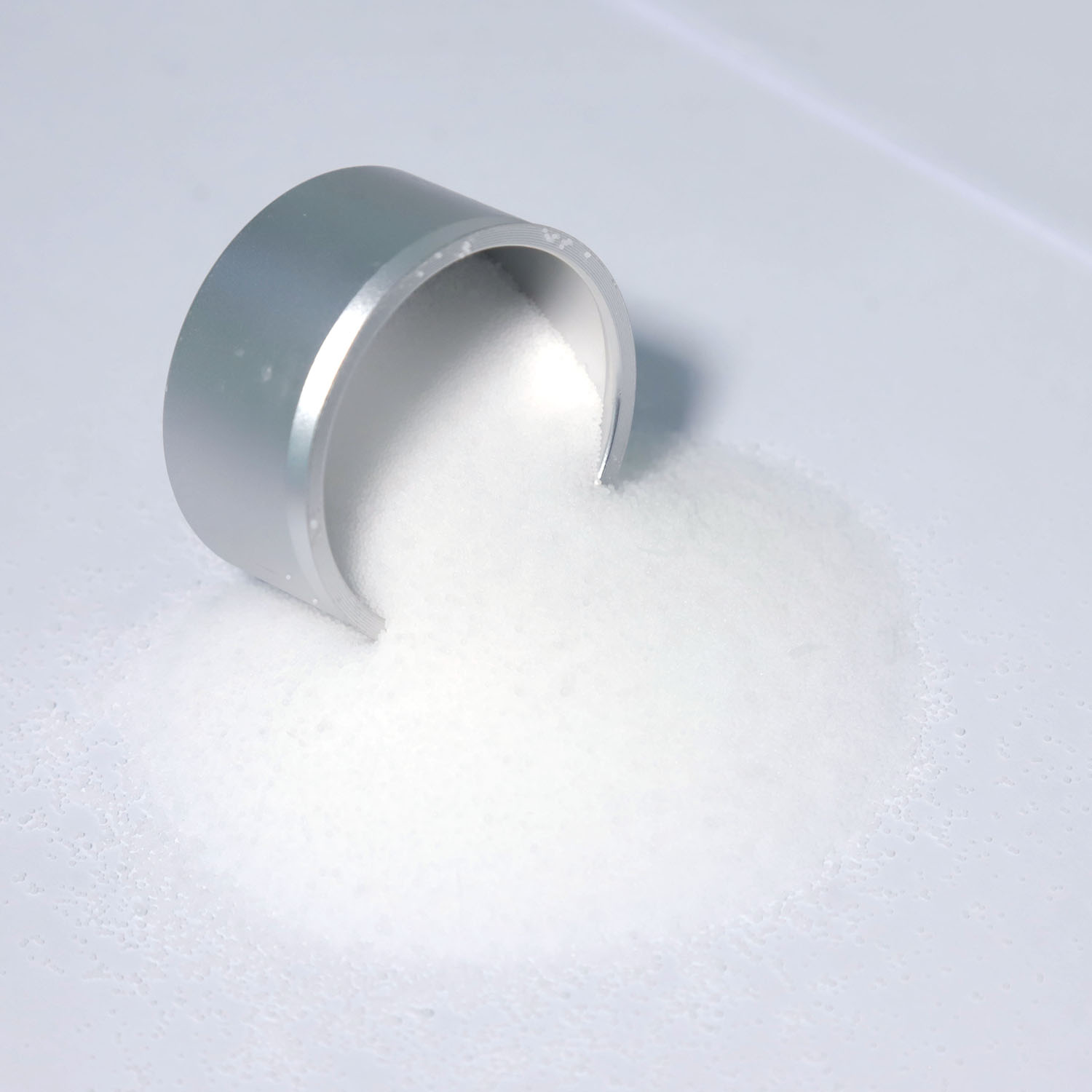
To bridge the compatibility gap in polar systems, standard polyethylene wax must undergo a structural transformation. Manufacturers achieve this through a controlled oxidation process. They expose the refined non-polar wax to air at elevated temperatures, often hovering around 380°C, under specific pressure conditions. This thermal-oxidative degradation breaks some of the long carbon chains and introduces oxygen-containing functional groups directly onto the polymer backbone.
The primary functional groups introduced are carboxyl (-COOH) and hydroxyl (-OH) groups. This chemical modification shifts the wax from being completely non-polar to partially polar. The degree of oxidation dictates the acid value of the final product, typically ranging from 15 to 30 mg KOH/g. This acid number is a mandatory specification for formulators to check on the Certificate of Analysis (CoA). Alongside the increase in polarity, the oxidation process slightly reduces the average molecular weight and alters the melt viscosity. The resulting oxidized wax possesses a unique solubility profile, allowing it to interact favorably with water, alcohols, and various polar solvents that would otherwise repel a standard homopolymer wax.
The introduced polarity fundamentally changes how the wax interacts within a liquid formulation. The carboxyl and hydroxyl groups improve wetting characteristics, allowing the wax to interact closely with pigments, fillers, and polar resin systems. In many formulations, oxidized polyethylene wax for coatings acts as an internal dispersant. The polar head of the wax molecule anchors to the surface of inorganic pigments like titanium dioxide, while the non-polar hydrocarbon tail extends into the surrounding medium, providing steric hindrance.
This steric stabilization prevents pigment agglomeration and flocculation in the grind phase. It proves particularly advantageous in stabilizing aqueous emulsions. When formulating waterborne architectural paints or water-based flexographic printing inks, standard non-polar waxes require excessive amounts of external surfactants to remain suspended. Oxidized variants, due to their inherent polarity, are far easier to emulsify. They maintain stable, uniform dispersions over long storage periods. You can verify this stability by running oven-aging tests at 50°C for 30 days. The result is improved color yield, better transparency in clear coats, and overall consistency in the final applied film.
The baseline rule for wax selection relies entirely on the polarity of the carrier system. Non-polar standard PE wax aligns perfectly with solvent-based formulations, oil-based inks, and powder coatings. In these systems, the non-polar nature of the wax matches the non-polar nature of the aliphatic or aromatic solvents (like xylene or mineral spirits), allowing for proper integration and predictable migration during the drying phase. Conversely, polar oxidized PE wax is absolutely essential for waterborne systems like acrylic emulsions or water-reducible alkyds.
Ignoring this baseline rule introduces severe chemical risks on the production floor. Using non-polar waxes in aqueous systems typically results in poor incorporation. The wax floats to the top of the mixing vessel or forms large, uncontrollable agglomerates that cause surface defects known as "seeds" in the final film. If you pull a Hegman gauge drawdown, you will immediately see the grit. On the other hand, introducing highly polar oxidized waxes into certain solvent systems leads to unwanted interactions with the resin, potentially causing massive viscosity spikes or complete gelation in the drum. Standard PE wax acts primarily as an external surface lubricant, migrating fully to the top to provide slip. Oxidized PE wax provides a more nuanced balance, offering internal lubrication that aids in flow and leveling, alongside external surface modification.
Both standard and oxidized waxes impact surface reflection, but their behavior depends heavily on particle size and formulation integration. Wax particles that migrate to the surface disrupt the perfect smoothness of the cured film. When light hits this micro-roughened surface, it scatters rather than reflecting directly back into the gloss meter, creating a matting or flattening effect.
Formulators manipulate particle size and wax density to achieve specific finishes. Larger wax particles (above 10 microns) protrude further from the film surface, scattering more light and producing a dead-matte finish on a 60-degree gloss meter. Finer particles (under 5 microns) provide a subtle satin appearance while maintaining high clarity in wood coatings. Oxidized waxes, because they disperse more uniformly and interact more closely with the resin, often provide a smoother, more controlled matting effect in waterborne systems. They achieve this without causing the hazy or cloudy appearance that poorly dispersed non-polar waxes create when forced into incompatible systems.
When evaluating physical film protection, formulators must weigh specific trade-offs. Standard PE wax generally provides a harder, more robust surface barrier. Because it is highly crystalline and completely non-polar, it delivers maximum water and chemical resistance. This makes it the preferred choice for industrial maintenance coatings, marine epoxies, and exterior architectural finishes where durability against the elements and harsh cleaning chemicals is the primary goal.
Oxidized variants offer a different balance. While they still provide excellent slip and mar resistance, their polar nature increases the surface energy of the cured film. High surface energy is required for recoatability. If a multi-coat system requires a primer, basecoat, and clearcoat, using a standard non-polar wax in the basecoat causes intercoat adhesion failure. The subsequent layer cannot wet out over the slick, non-polar surface, leading to crawling or fish-eyes. Oxidized waxes mitigate this risk, providing necessary slip while ensuring the next layer of paint adheres properly during the recoat window.
The physical form of the wax additive is just as important as its chemical composition. Historically, formulators had to melt wax flakes and create their own emulsions or dispersions using high-shear milling equipment like sand mills or three-roll mills. Today, the application of oxidized wax microbeads for coatings streamlines the manufacturing process.
Micronized formats improve ease of incorporation. Manufacturers produce these microbeads to precise particle size distributions, often ranging from a D50 of 5 to 15 microns. They eliminate the need for pre-dispersion or aggressive high-shear milling on the factory floor. Formulators simply stir the microbeads into the let-down phase of the coating production using a standard Cowles blade. This provides highly consistent particle size distribution, ensuring uniform surface texturing, predictable matting, and reliable scratch resistance from batch to batch without risking over-grinding the wax.
Technical Comparison: Standard vs. Oxidized Polyethylene Wax | ||
Property / Characteristic | Standard Polyethylene Wax | Oxidized Polyethylene Wax |
|---|---|---|
Chemical Polarity | Completely Non-Polar | Partially Polar |
Functional Groups | None (Hydrocarbon only) | Carboxyl (-COOH), Hydroxyl (-OH) |
System Compatibility | Solvent-based, Powder Coatings | Waterborne, Polar Solvent Systems |
Primary Function | External Slip, Anti-Blocking, Water Resistance | Internal Dispersion, Emulsion Stability, Slip |
Recoatability | Poor (Low Surface Energy) | Excellent (Higher Surface Energy) |
Acid Value | Zero | Variable (Typically 15-30 mg KOH/g) |
Typical Addition Phase | Grind or Hot Melt | Let-down (if micronized) or Emulsion Phase |
Understanding the market variables that influence additive costs helps procurement teams make informed sourcing decisions. The baseline polyethylene wax price is heavily tied to the petrochemical industry, specifically the cost of ethylene gas and the complexities of the polymerization process. Standard homopolymer waxes require fewer manufacturing steps, making them highly accessible for bulk industrial applications like road marking paints or heavy-duty protective coatings.
Oxidized and micronized variants involve additional processing. The controlled oxidation process is highly energy-intensive, requiring specialized reactors capable of safely handling high temperatures and pressurized air. Furthermore, micronizing the wax into precise microbeads involves advanced jet-milling technology to ensure tight particle size distribution. These additional refining and processing steps naturally influence the final cost of oxidized and micronized waxes compared to standard flaked or pastillated homopolymers.
Procurement must evaluate return on investment beyond the upfront per-kilogram cost. A framework for evaluating total formulation cost involves comparing the raw material price against the required dosage and the functional efficiency of the additive. While oxidized waxes involve more processing, their high efficiency in compatible systems often justifies their use.
In waterborne formulations, a highly efficient oxidized wax acts as a co-dispersant. This reduces the need for secondary dispersants, wetting agents, or additional anti-settling rheology modifiers. By lowering the overall loading levels required to achieve the desired slip and mar resistance—often dropping from a 2.0% loading down to 0.5%—and by eliminating the need for redundant additives, an oxidized wax ultimately lowers the total cost of the finished coating formulation. It also reduces inventory complexity by allowing one additive to perform multiple functions.
One of the most common formulation failures involving wax additives is excessive migration, commonly referred to as blooming. Blooming occurs when the wax continues to migrate to the surface long after the film has cured. This creates a thick, uneven layer of wax on the top of the coating. The result is severe cloudiness, a drastic loss of gloss, and a greasy tactile feel. In multi-coat systems, blooming guarantees intercoat adhesion failure, causing the topcoat to peel off in sheets.
Mitigating blooming requires strict formulation discipline. Formulators must optimize molecular weight selection; waxes with excessively low molecular weights are more prone to uncontrolled migration. Adjusting curing temperatures to match the wax's melting point ensures the wax locks into the surface interface properly during the bake cycle. Most importantly, formulators must strictly control loading percentages. Overloading the system with wax is the primary cause of blooming. Conducting ladder studies to find the absolute minimum dosage required to achieve the desired slip is a mandatory step in the R&D process.
Maintaining consistent coating performance requires rigorous quality control of incoming raw materials. Formulators must verify critical specifications on the supplier's Technical Data Sheets (TDS) for every batch of polyethylene wax. Key metrics include the acid value (for oxidized variants), the drop melting point, penetration hardness, and the exact particle size distribution (d50 and d90 values for micronized waxes).
Before scaling up production, R&D teams should implement strict testing protocols. Assess shelf-life stability by subjecting liquid samples to accelerated heat-aging tests in an oven at 50°C for 30 days to ensure the wax does not fall out of suspension or cause the emulsion to break. Test the cured films for chemical resistance retention using MEK double rubs, and verify recoatability using cross-hatch adhesion tests. Verifying these parameters in the lab prevents costly batch failures and ensures the final product performs reliably in the field.
The choice between standard and oxidized polyethylene wax is dictated strictly by the polarity of the carrier system and the specific surface performance requirements of the final application. Standard non-polar waxes deliver unmatched hardness, water resistance, and external slip for solvent and powder systems. Conversely, oxidized waxes provide the essential polarity required for stable emulsification, pigment dispersion, and recoatability in waterborne formulations. Procurement and R&D teams should default to standard PE wax for powder and solvent systems where scratch and water resistance are the primary goals, and specify oxidized PE wax for waterborne systems requiring superior pigment wetting.
Audit your current coating formulations to verify that the polarity of your wax additives matches your resin and solvent systems.
Request samples and updated TDS/SDS documentation from your suppliers to confirm acid values and particle size distributions.
Conduct ladder studies in the lab, testing loading levels from 0.5% to 2.0%, to pinpoint the exact dosage that maximizes slip without triggering blooming.
Perform cross-hatch intercoat adhesion testing on all systems utilizing wax additives to ensure recoatability standards are met.
Run 30-day accelerated oven aging tests on liquid samples to confirm emulsion stability before scaling to full production.
A: The main difference is chemical polarity. Standard polyethylene wax is entirely non-polar. Oxidized polyethylene wax undergoes high-temperature air oxidation, introducing polar carboxyl and hydroxyl functional groups. This shifts the wax from non-polar to polar, changing its solubility, improving compatibility with waterborne systems, and shifting its function from purely external lubrication to a balance of internal dispersion and external slip.
A: Oxidized polyethylene wax is required for waterborne systems because its polar functional groups allow it to be easily emulsified in water. Unlike non-polar waxes that repel water and cause phase separation or floating, oxidized waxes integrate smoothly. They provide stable dispersions, prevent pigment agglomeration, and improve wetting without requiring excessive amounts of external surfactants.
A: Polyethylene wax improves scratch resistance through a controlled migration mechanism. During the drying or curing process, wax particles become incompatible with the shrinking resin and float to the surface. They form a tough, microscopic physical barrier. This layer lowers the coefficient of friction, allowing objects to slide off the surface rather than cutting into the coating.
A: The price is primarily driven by raw material costs, specifically ethylene gas, and the complexity of the manufacturing process. Standard homopolymer waxes require fewer processing steps. Oxidized waxes involve an energy-intensive high-temperature oxidation process. Additionally, physical forms like precision-milled micronized beads require advanced jet-milling technology, which influences the final cost of the additive.
A: Oxidized wax microbeads offer exceptional ease of dispersion. Because they are pre-micronized to a precise and consistent particle size (typically 5-15 microns), they eliminate the need for time-consuming high-shear milling or pre-emulsification. Formulators stir them directly into the let-down phase, ensuring uniform matting, predictable surface texturing, and consistent batch-to-batch performance.
A: While technically possible, it is highly inefficient and risky. Standard non-polar wax strongly repels water. To force it into an aqueous system, formulators must use heavy doses of surfactants and high-shear equipment to create an emulsion. This often leads to instability and surface defects like seeding. Oxidized wax is a much more stable choice for water-based applications.
A: Prevent wax blooming by strictly controlling the additive loading percentage; overloading is the primary cause of excessive migration. Ensure you select a wax with an appropriate molecular weight for your system. Finally, match the wax's drop melting point to your specific curing or baking temperatures to ensure the wax locks into the surface interface properly during film formation.


