
- All
- Product Name
- Product Keyword
- Product Model
- Product Summary
- Product Description
- Multi Field Search
Views: 147 Author: Site Editor Publish Time: 2026-09-10 Origin: Site


Production managers and procurement engineers often face crippling operational bottlenecks daily. High extruder torque, poor pigment wetting, and thermal degradation of baseline lubricants routinely disrupt manufacturing timelines. You need reliable, high-performance solutions to keep extrusion lines moving smoothly and efficiently.
Traditional paraffin or amide waxes frequently fall short in demanding, high-throughput environments. They often degrade at elevated temperatures and fail to deliver adequate lubrication. Shifting to an engineered polyethylene wax has evolved from a simple operational luxury into a strategic necessity. Plants must adapt today to maintain competitive cycle times.
This article explores how integrating the right polyethylene wax additive drives measurable improvements across your operations. You will discover proven methods for boosting production speed and securing product consistency. We will also outline clear strategies for meeting strict compliance standards globally.
Efficiency Gains: PE wax acts as an elite external/internal lubricant, reducing melt viscosity and mechanical friction without compromising mechanical properties.
Masterbatch Optimization: Drastically improves pigment dispersion, reducing agglomeration and lowering overall colorant costs.
Thermal & Chemical Stability: Outperforms standard waxes at high processing temperatures, minimizing plate-out and thermal degradation.
Application Versatility: Available in diverse grades (non-polar, oxidized, emulsion) to meet strict compliance standards (FDA/EFSA) across plastics, coatings, and adhesives.
Traditional lubricants often create invisible ceilings on your production capacity. Standard paraffin waxes possess inherently low melting points. They easily volatilize when exposed to high processing temperatures. This volatility causes severe off-gassing during extrusion. Furthermore, these basic waxes exhibit poor compatibility with modern engineered resins.
When you rely on outdated lubricants, friction increases inside the extruder barrel. The polymer melt overheats due to excessive shear. This leads directly to thermal degradation and unacceptable color shifts in the final product. Operators must then slow down line speeds to compensate. This manual intervention destroys overall equipment effectiveness (OEE) and shrinks profit margins.
The molecular structure of low molecular weight polyethylene provides a robust solution. We utilize its high crystallinity and exceptional thermal stability to resolve these specific bottlenecks. Unlike simple paraffin, this engineered polymer resists breaking down under intense heat. It maintains its structural integrity, providing a consistent slip layer between the polymer melt and the metal machinery.
You might notice higher upfront costs when upgrading additives. However, this initial investment rapidly pays for itself. You will see an immediate reduction in energy consumption because extruder torque drops significantly. Fewer rejected batches and longer continuous run times dramatically improve your cost-to-outcome ratio. Your facility stops wasting raw materials and starts maximizing output.
Rigid and flexible PVC formulations demand precise lubrication balance. Success in this sector requires carefully delayed fusion times. You must prevent the sticky PVC melt from adhering to hot metal surfaces. Additionally, buyers expect flawless surface gloss on finished pipes, profiles, and cables. Achieving all three criteria simultaneously is notoriously difficult.
Integrating a specialized polyethylene wax for PVC processing functions as a highly efficient external lubricant. It migrates predictably to the surface of the polymer matrix during processing. Once there, it manages friction directly between the PVC melt and the extruder barrel or die. This controlled migration prevents premature fusion and protects the compound from burning.
The mechanism of action relies on controlled incompatibility. Because the wax is largely non-polar, it separates slightly from the polar PVC matrix. It forms a microscopic, sacrificial slip coating. This coating allows the bulk polymer to slide through complex die geometries without hanging up or degrading.
The measurable outcomes are highly compelling for plant managers. Extrusion line speeds often increase substantially. Electrical energy draw decreases because the motor works less against internal friction. Most importantly, correct dosing eliminates "plate-out." Plate-out occurs when degraded additives migrate and stick to tooling equipment, forcing costly shutdowns for cleaning. Proper lubrication keeps your tooling clean and your lines running continuously.
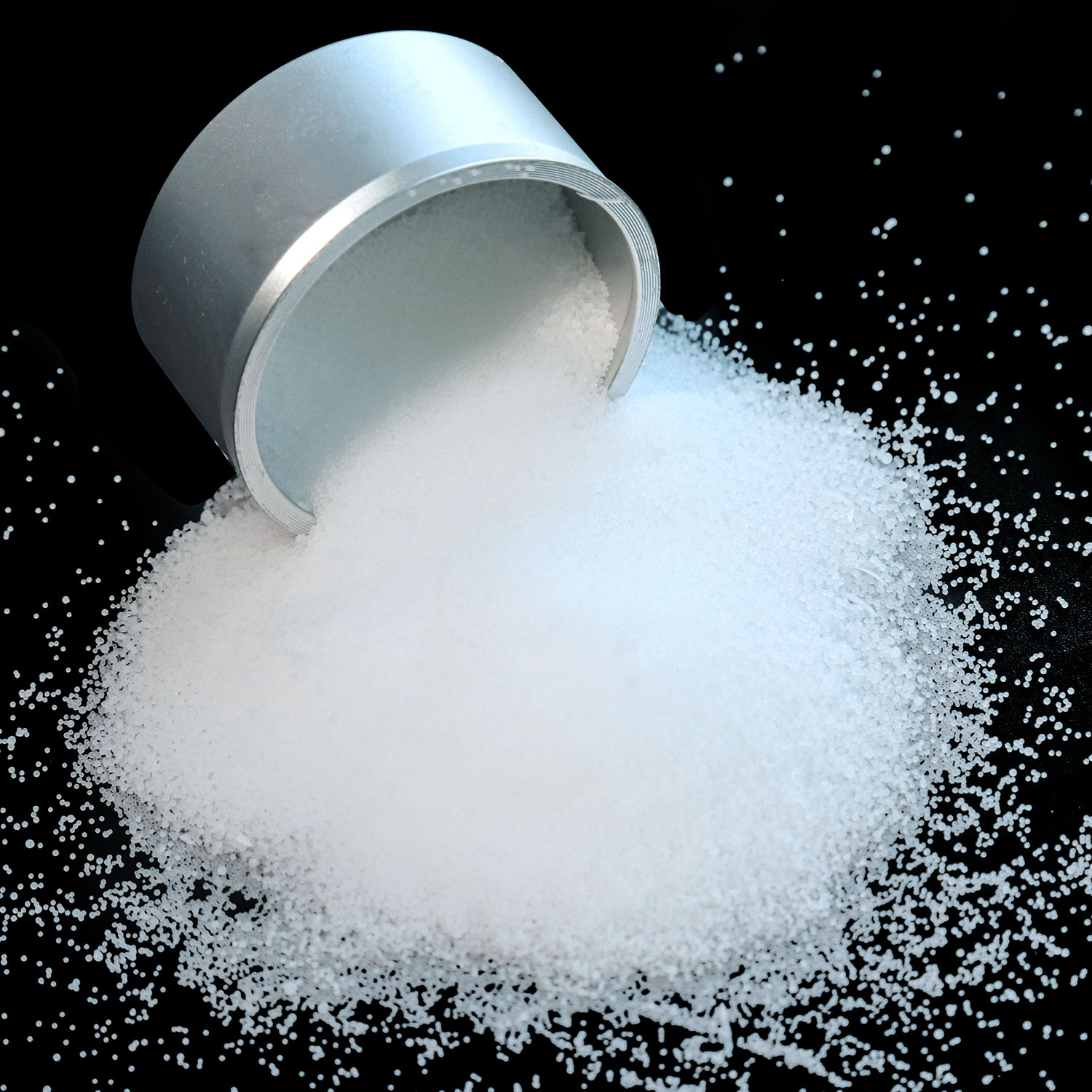
The pigment challenge remains a major financial hurdle in plastic manufacturing. High-performance colorants, especially titanium dioxide and organic pigments, carry massive costs. Poor wetting during compounding causes these expensive particles to clump together. Agglomeration leads to profit loss, as you must use higher pigment loads to achieve the target opacity or tint.
Using a targeted polyethylene wax for masterbatch dispersion changes the compounding dynamic entirely. The additive melts quickly and coats individual pigment particles. It essentially wets out the dry powder before it enters the high-shear mixing zone. This action breaks down tough agglomerates during the initial compounding phase.
This dispersion mechanism drastically reduces the filter pressure value (FPV) during extrusion. A high FPV indicates a blocked screen pack, which means undispersed pigments are clogging the system. By lowering the FPV, you ensure smooth continuous operation and extend the lifespan of your filtration screens.
Your measurable outcomes translate directly to the bottom line. You achieve much higher color strength. This efficiency allows you to reduce overall pigment loading without sacrificing visual quality. Tinting becomes uniform across massive production runs. Finally, you prevent ugly surface defects, such as specks or streaks, in the final plastic film or molded part.
Performance Comparison: Traditional Wax vs. Engineered Dispersion Additives
Performance Metric | Traditional Paraffin Wax | Engineered Polyethylene Additive |
|---|---|---|
Pigment Wetting Speed | Slow, prone to dry spots | Rapid, full particle encapsulation |
Filter Pressure Value (FPV) | High (frequent screen blockages) | Low (extended screen life) |
Color Strength Yield | Inconsistent, requires over-pigmentation | Maximum yield, allows pigment reduction |
Thermal Stability | Low, degrades above 200°C | Excellent, stable up to 280°C |
The utility of these additives extends far beyond basic lubrication. Manufacturers have developed distinct solution categories to address complex formulation challenges. Understanding these formats helps you select the precise chemical tool for your specific application.
Oxidized variants introduce polar functional groups to the molecular chain. This oxidation process fundamentally alters performance. It provides superiority in applications requiring strong adhesion or printability. In PVC formulations, oxidized formats deliver a critical balance of internal and external lubrication. They promote excellent fusion while still offering necessary metal release properties.
Emulsions represent another vital category. Water-based systems require liquid formats for homogenous blending. Textile manufacturing, paper coatings, and architectural paints rely heavily on these emulsions. They provide scratch resistance and water repellency without introducing hazardous solvents into your facility. They blend easily into aqueous formulations, ensuring stability and long-term shelf life.
Compliance and security remain paramount, especially in food packaging applications. Sourcing raw materials requires strict diligence. You must evaluate suppliers based on verified regulatory clearances. Always secure documentation proving FDA compliance, specifically under regulations like 21 CFR 175.300. European markets require EFSA clearances. Sourcing certified grades ensures absolutely no toxic migration occurs from the plastic substrate into the packaged food.
Integrating new additives always carries specific implementation risks. You must navigate these carefully to protect your product quality. Over-lubrication remains the most common pitfall on the factory floor. If you overdose the additive in PVC processing, you risk severely delayed gelation. This delay ruins the physical properties of the profile. In other plastics, excessive lubrication can cause a distinct reduction in tensile strength and impact resistance.
Compatibility mismatches present another serious danger. Using a standard non-polar grade in a highly polar polymer matrix usually causes problems. The additive will migrate too quickly to the surface. This rapid migration causes blooming, ruining the aesthetic finish and interfering with downstream printing or sealing processes.
You need a skeptical, evidence-based evaluation framework to shortlist suppliers effectively. Do not rely solely on marketing claims. Instead, rigorously evaluate the technical data and supply chain security. Here is a definitive checklist for qualifying your next additive partner:
Verify Melt Point and Viscosity Consistency: Scrutinize the Technical Data Sheet (TDS). Look for narrow specification ranges. Broad ranges indicate poor process control. Batch-to-batch uniformity is critical for maintaining your own product quality.
Test for Purity and Volatility: Request laboratory data on volatile organic compounds (VOCs). Low VOC levels are mandatory. High volatiles lead to severe off-gassing, workplace safety hazards, and surface defects during high-temperature processing.
Assess Supply Chain Reliability: Evaluate the manufacturer's true production capacity. Investigate their raw material sourcing stability. A cheap additive becomes incredibly expensive if supply chain disruptions force your plant to shut down.
Demand Regulatory Documentation upfront: Never accept verbal assurances for food-contact or medical applications. Require valid, up-to-date FDA or EFSA certification documents before beginning any pilot trials.
Upgrading your lubrication and dispersion strategy fundamentally transforms manufacturing efficiency. An engineered additive is not just a commodity chemical purchased on price alone. It is a vital process-enabling investment. It unlocks faster line speeds, eliminates equipment fouling, and maximizes the yield of expensive pigments.
Your next steps require practical, data-driven action. First, audit your current extruder torque data to identify energy spikes or thermal degradation bottlenecks. Second, assess your pigment waste levels and current FPV metrics. Finally, request exact-grade samples, alongside comprehensive TDS and MSDS documentation, to conduct controlled pilot testing on your floor.
Take control of your processing parameters today. Encourage your procurement and engineering teams to consult with specialized technical sales representatives. By matching the exact molecular weight and density grade to your specific polymer matrix, you ensure a flawless, high-efficiency production environment.
A: The standard industry dosage typically ranges from 0.1 to 0.5 phr (parts per hundred resin), depending heavily on the specific formulation. Rigid PVC usually requires slightly more than flexible PVC. However, exact dosage requires rigorous baseline testing on your equipment to ensure optimal fusion while preventing problematic plate-out.
A: Oxidation fundamentally alters the polymer by adding oxygen-containing functional groups, such as ester and carboxyl groups. This chemical modification makes the wax polar. The resulting polarity drastically improves adhesion properties, enhances emulsification capability, and ensures superior compatibility with polar resins and water-based systems.
A: Yes, it is safe, but this is strictly dependent on the specific grade used. Buyers must demand explicit, documented FDA or EFSA regulatory compliance certificates from their supplier. Industrial grades often contain unapproved residues or low-molecular-weight fractions that are strictly prohibited in food packaging applications.


